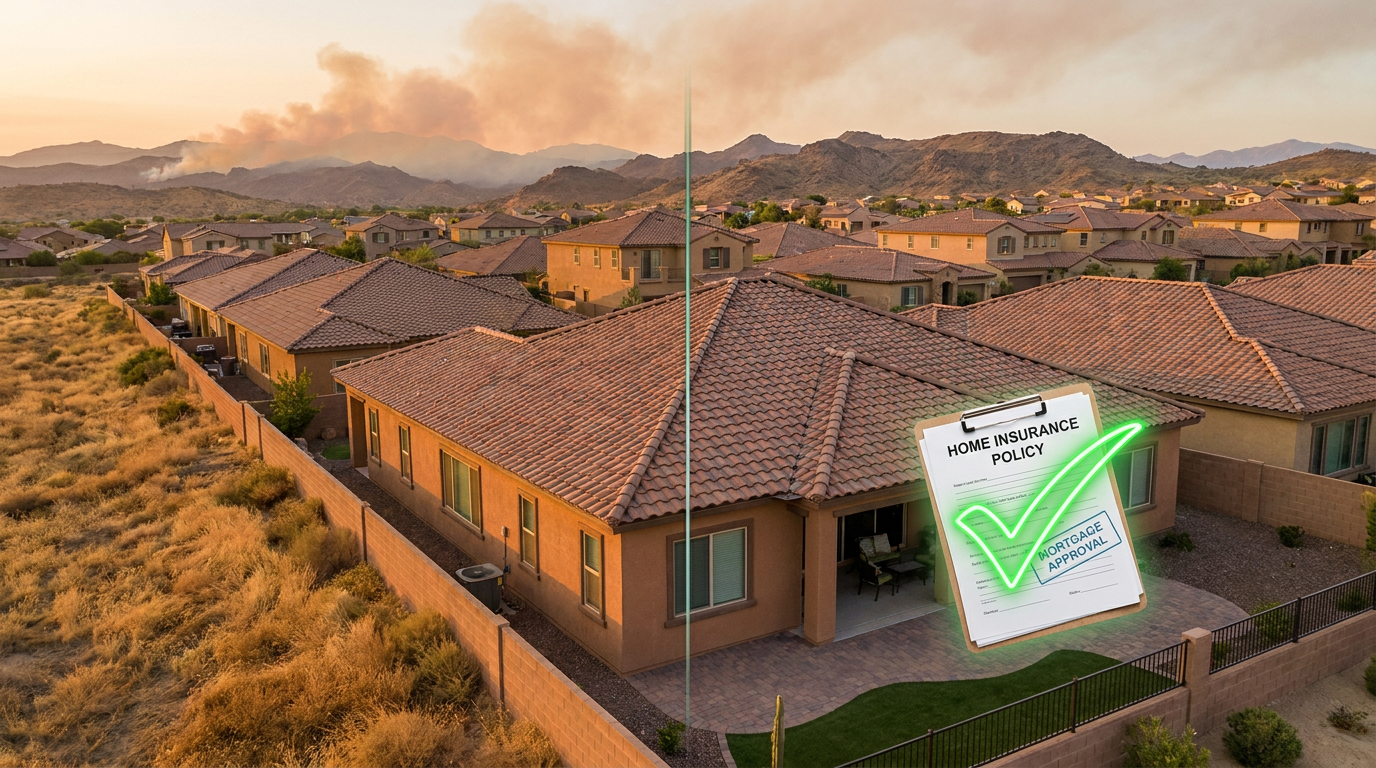
From Water Shortages to Wildfire Zones: How 2026 Climate and Insurance Rules Are Changing Mortgage Approvals in AZ, CA, NM, and TX
Climate Risk Just Became a Mortgage Issue in the Southwest
If you’re shopping for a home in Arizona, California, New Mexico, or Texas in 2026, you’re not just being underwritten as a borrower—your property’s climate and hazard profile is being underwritten too.
New insurer underwriting standards, updated wildfire and flood risk maps, and drought-driven water rules across the Southwest are now directly affecting which homes qualify for financing, how much insurance costs, and even whether a deal can close at all. Lenders, investors, and mortgage insurers are baking climate risk into their approval models in a way that simply wasn’t happening a few years ago.
For buyers and real estate agents, understanding these changes is no longer optional. It’s the difference between a smooth closing and a last-minute denial or a painful payment shock when the final insurance quote comes back.

Why Climate and Insurance Rules Matter for Your Mortgage in 2026
Here’s what’s different about 2026 compared to earlier markets:
- Insurers are tightening underwriting in high-risk zones. In many Southwest counties, carriers now use granular wildfire and flood models street by street, not just broad ZIP codes. Some homes are seeing non-renewals or sharply higher premiums if they don’t meet updated mitigation or defensible-space standards.
- Mortgage investors are stress-testing insurance and tax costs. Underwriters are looking harder at total monthly housing expense (PITI: principal, interest, taxes, and insurance). If climate-related insurance pushes your payment too high, your loan may not fit program guidelines.
- Local water and building rules affect collateral value. Drought restrictions, well regulations, and fire-safe construction codes can influence whether a property is considered acceptable collateral and how appraisers view its marketability.
The result: properties that look similar on a listing sheet may perform very differently when they hit an underwriter’s desk.
How Climate Risk Is Showing Up in Mortgage Approvals
Across AZ, CA, NM, and TX, underwriters and insurers are focusing on several key hazard categories. Below are the big ones we see affecting approvals and pricing in 2026.
1. Wildfire Zones (Especially in AZ, CA, and NM)
In 2026, many insurers use updated wildfire risk maps and proprietary fire scores to decide whether they’ll write a policy, how much it will cost, and what mitigation is required. Lenders in turn are responding to these insurance realities.
What this means for your mortgage:
- Availability of standard coverage. In higher-risk parts of Arizona (foothill and forest-adjacent communities), California (Sierra foothills, inland canyons, and parts of Sonoma, Napa, and San Diego counties), and New Mexico (forest-adjacent tracts near the Sandias and in northern counties), some traditional carriers are scaling back. Buyers may need to rely on state or last-resort plans plus separate fire coverage, which can be more expensive.
- Higher premiums impacting debt-to-income (DTI). Underwriters now routinely re-run DTI when final insurance quotes arrive. A $150–$300/month swing in premiums can be enough to push a loan outside allowable DTI ratios, especially for first-time buyers stretching in price.
- Property condition and defensible space. Some insurers and loan investors are giving preference to homes that meet newer fire-resilience standards (cleared vegetation, Class A roofs, ember-resistant vents, and fire-resistant siding). In select high-risk zip codes, missing mitigation can trigger extra reviews, conditions, or even denials.
2. Floodplains and Updated Flood Maps (AZ, CA, NM, TX)
Southwest buyers sometimes assume flood isn’t an issue, but updated floodplain maps and recent flood events have changed that thinking. In 2026, more lenders insist on up-to-date flood determinations even in areas that weren’t previously flagged.
Impacts on mortgage approvals:
- Mandatory flood insurance in high-risk zones. If a home is in a mapped high-risk flood zone, most loans require a flood insurance policy as a condition of closing. The annual premium is included in your qualification ratios, so higher premiums can reduce the price you qualify for.
- Elevation certificates and map changes. If a property’s status has changed on the newest maps, buyers may be able to use an elevation certificate or updated determination to challenge an old assumption about risk—or discover new requirements that affect affordability.
- Private vs. government-backed flood options. In some parts of TX and coastal or river-adjacent areas of CA and AZ, private flood policies may offer broader coverage at different price points than government-backed alternatives. Underwriters will confirm that any policy chosen meets investor standards.
3. Water Availability and Drought-Driven Rules (AZ, CA, NM, TX)
Water is now a central concern in many Southwest markets. States and localities are tightening rules on groundwater, new wells, subdivision approvals, and long-term supply planning.
How this plays into mortgages:
- Well and septic properties. In rural and exurban parts of AZ, NM, and TX especially, well production, well-sharing agreements, and water quality documentation are getting more scrutiny. Underwriters want to see stable, legal, and documented access to potable water.
- HOA and municipal water restrictions. Some communities have tiered water pricing, landscaping restrictions, and potential surcharge structures. While this doesn’t directly change loan guidelines, it can change your total monthly housing costs and the perceived long-term desirability of the property.
- Subdivision and new-build approvals. New developments may be required to show multi-decade water supply, which can delay or alter projects. For buyers, this can affect closing timelines, available inventory, and the stability of HOA dues or special assessments over time.

What Underwriters Are Looking For in Higher-Risk Counties
Underwriters are using a mix of automated risk engines and human review to evaluate climate and hazard exposure. While each lender and investor has its own framework, properties in higher-risk counties of AZ, CA, NM, and TX tend to trigger extra checks in these areas:
- Proof of insurability. An actual insurance quote or binder that meets coverage guidelines, not just an assumption. They want sufficient dwelling coverage, appropriate deductibles, and any required riders (e.g., fire, wind, flood, or extended replacement cost).
- Realistic premium assumptions. Some lenders will re-underwrite if the final premium exceeds the estimate used in your initial loan approval. If your quote jumps significantly, expect your file to be re-run through automated underwriting.
- Property condition and code compliance. Recent roof, upgraded electrical, defensible space, and adherence to local fire and building codes reduce perceived risk. Deferred maintenance or unpermitted structures can raise red flags.
- Local hazard and resilience regulations. If you’re in a jurisdiction with strict fire-safe building rules, water-use ordinances, or mandatory defensible-space inspections, underwriters will often want evidence that the property complies or can be brought into compliance without major cost.
How Buyers Can Choose the Right Property in Today’s Climate-Aware Market
In 2026, smart house-hunting in the Southwest means thinking like an underwriter and an insurer, not just a shopper scrolling photos.
1. Screen Listings for Insurance Reality, Not Just Curb Appeal
- Ask early about insurance history. Has the property’s current owner had non-renewal notices, large premium hikes, or trouble placing coverage? That history can be a preview of what you’ll face.
- Check hazard overlays. Use public wildfire and flood maps and ask your agent to pull any available local hazard disclosures. If you’re on the edge of a mapped high-risk area, a small location difference can mean a big difference in insurance cost.
- Prioritize resilient construction. Class A roofs, fire-resistant or non-combustible siding, updated windows, and modern electrical and plumbing systems all help insurers—and by extension, underwriters—feel more comfortable with the risk.
2. Think Long-Term Affordability, Not Just Today’s Payment
- Stress-test your budget. When we model scenarios for clients, we often run a “base-case” insurance quote and then a higher-cost scenario to see at what point the payment becomes uncomfortable—even if it’s still technically approvable.
- Account for climate-linked HOA and utility costs. Some communities in AZ, CA, NM, and TX are introducing assessments or HOA projects for fire-hardening, water infrastructure, or drainage improvements. These can raise dues or create special assessments in the future.
- Consider resale in a changing climate. A home that is insurable and affordable today may become more expensive or harder to sell if risk maps or regulations tighten again. Favor areas investing in mitigation and resilience.
How to Structure Your Offer to Avoid Last-Minute Loan Problems
In a climate- and insurance-sensitive market, your purchase contract can either set you up for success or introduce hidden risk. Here are ways to write offers that protect you.
1. Build in an Insurance Contingency Window
- Request time to shop insurance. Negotiate a clear window—ideally at least 5–7 days after mutual acceptance—where you can obtain firm insurance quotes and exit or renegotiate if premiums are materially higher than expected.
- Align with your financing deadlines. Make sure your insurance contingency aligns with your loan contingency so your lender has the final numbers in time to underwrite your true payment.
2. Order Insurance Quotes Early in Escrow
- Don’t wait for the appraisal. In higher-risk areas, your first calls after opening escrow should be to insurance agents. Provide the full address, year built, construction details, roof type, and any mitigation features so you get accurate quotes.
- Compare multiple carriers and structures. In some wildfire and flood-affected counties, combining a standard homeowners policy with a separate wildfire or flood policy can be more flexible than a single bundled product. Your lender just needs to confirm coverage and insurer acceptability.
3. Use Seller Credits Strategically
- Offset higher insurance costs upfront. If quotes come in higher than expected but the property still makes sense, ask your agent about negotiating seller credits to lower your closing costs or temporarily buydown your rate, helping offset the payment increase.
- Negotiate mitigation improvements. In some cases, a seller may agree to clear vegetation, replace a highly flammable roof, or address drainage issues before close, which can improve insurability and reduce your long-term risk.
Documentation You’ll Need to Keep Your Loan on Track
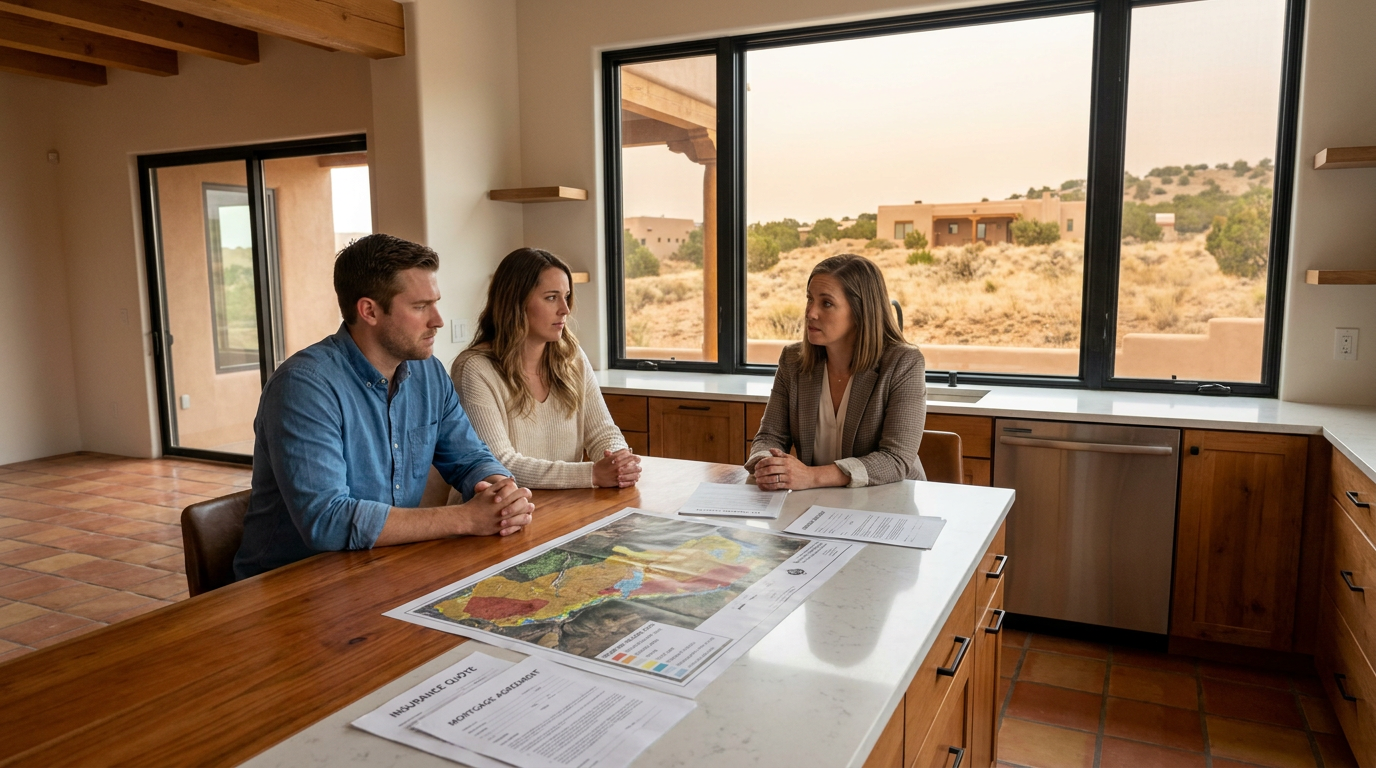
Because climate and hazard risk are now baked into the loan process, having the right documentation ready can save days—or even a deal.
- Insurance quote or binder. Your lender will need a formal quote or binder showing coverage amounts, deductibles, premiums, and carrier details. For properties in wildfire or flood areas, expect closer scrutiny.
- Flood determinations or elevation certificates (if applicable). If the property is near a floodplain or a recent map change, these documents help clarify what coverage is required.
- Well reports and water docs for rural properties. Pump tests, water quality reports, and well-sharing agreements can be vital in parts of AZ, NM, and TX.
- Mitigation and upgrade records. In fire-prone or storm-exposed areas, documentation of roof replacement, siding upgrades, defensible-space work, or other resilience improvements can support both insurance and appraisal.
How Aron Home Loans Helps Buyers Navigate 2026’s Climate & Insurance Rules
At Aron Home Loans, we work every day with borrowers across Arizona, California, New Mexico, and Texas who are confronting these new realities for the first time. Our role is to connect the dots between climate risk, insurance markets, and your mortgage options so you’re not blindsided at the eleventh hour.
Here’s how we can help:
- Pre-approval that accounts for realistic insurance costs. We’ll model scenarios based on the type of property and area you’re targeting, so you know your true comfortable price range.
- Early coordination with insurance professionals. We encourage clients to get sample quotes during the home search phase in higher-risk areas, not just after going under contract.
- Program and product guidance. From conventional to government-backed loans, we’ll help you understand which products are most flexible with respect to insurance structures and property types in your target market.
- Clear communication with your agent and closing team. We’ll help your real estate agent structure timelines and contingencies that reflect 2026’s climate-aware underwriting reality.
Thinking About Buying in AZ, CA, NM, or TX in 2026?
If you’re planning a purchase this year in Arizona, California, New Mexico, or Texas, climate and insurance rules will be part of the conversation whether you plan for them or not. By understanding how underwriters are evaluating wildfire zones, floodplains, and water constraints, you can choose smarter properties, write stronger offers, and avoid painful surprises at closing.
Ready to explore your options? Reach out to Aron Home Loans for a climate- and insurance-aware pre-approval tailored to today’s Southwest market.