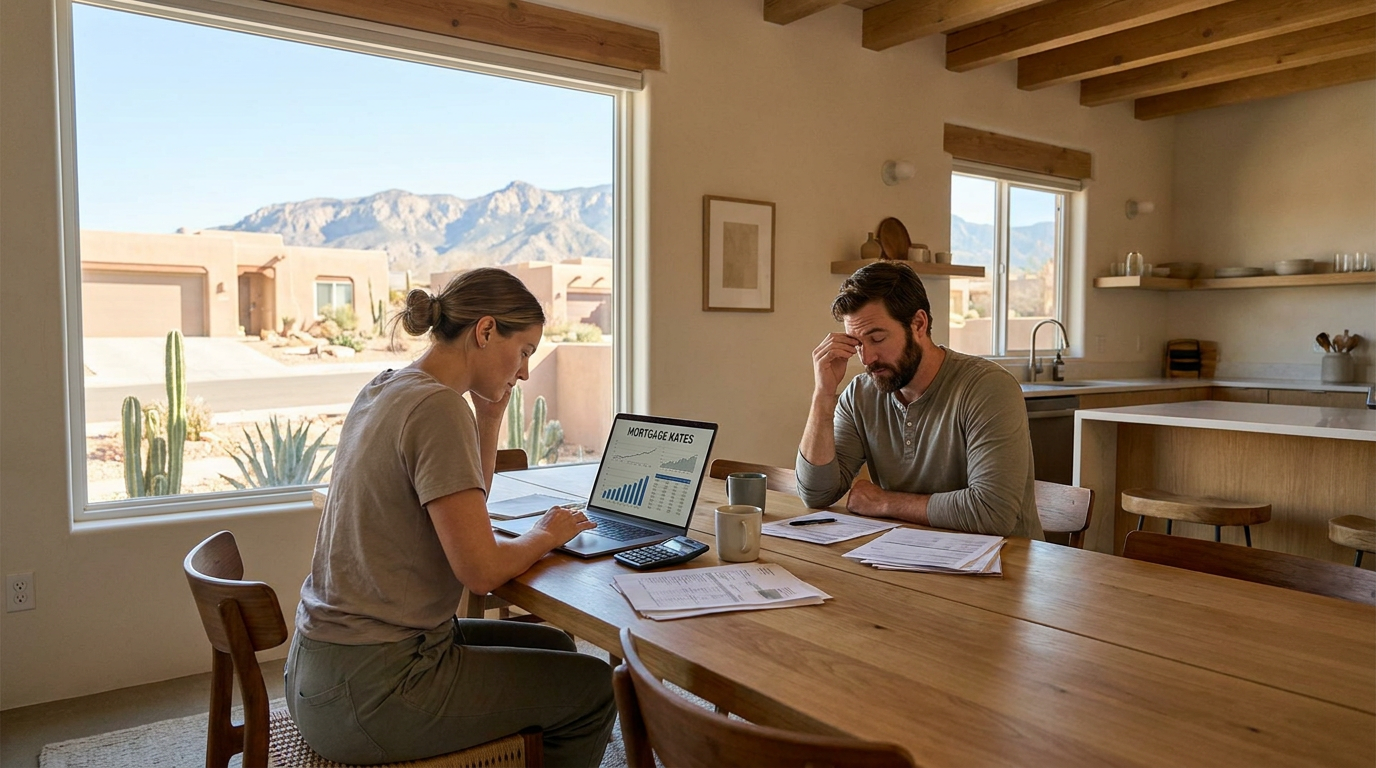
“Low Rates, High Anxiety”: Why Southwest Buyers Are Freezing Deals Over Job Security and Election Jitters in Late‑Summer 2026
“Low Rates, High Anxiety” in the Southwest Housing Market
If you’re shopping for a home in Arizona, California, New Mexico, or Texas right now, you’re living in a strange moment: mortgage rates have eased a bit, inventory is a touch better, yet a lot of buyers are quietly backing away from the table.
As of the week ending August 20, 2026, Freddie Mac reports the average 30‑year fixed mortgage rate at about 6.65%, down slightly from 6.67% the prior week and noticeably better than earlier this summer. Fifteen‑year fixed rates have ticked down as well, marking a modest but real improvement for borrowers. At the same time, Mortgage Bankers Association data shows the average contract rate on conforming 30‑year loans hovering around 6.77%, with applications slipping 0.4%—a sign that even small rate dips aren’t unleashing a rush of demand.
So what’s really going on? In a phrase: low rates, high anxiety.

The Late‑Summer 2026 Reality Check: Rates, Prices, and Inventory
Although rates have edged lower, affordability is still a major challenge across the Southwest—especially in key hubs like Phoenix, Tucson, San Diego, Los Angeles, Albuquerque, Dallas–Fort Worth, Austin, Houston, and San Antonio.
Nationally, existing‑home sales fell 1.7% from June to July 2026, even as the median price climbed to a record $434,100. Inventory is only about 2% higher than a year ago, which means buyers have a bit more selection but are still facing stubbornly high prices.
The Phoenix metro area is a good example. Even as sales cool, the median existing single‑family home price recently edged up to roughly $477,700 in Q2 2026. That’s a clear signal: price pressure hasn’t disappeared just because rates slipped a bit. Similar patterns are playing out across much of Arizona, California, New Mexico, and Texas, where strong in‑migration and limited resale inventory keep a floor under prices.
Meanwhile, Zillow’s July 2026 data shows home sales up about 7% year‑over‑year, with for‑sale inventory roughly 1.5% above last year. But the same report, along with national builder surveys, points to a slower second half of 2026 and widespread price cuts on new construction as builders work to move standing inventory in the face of buyer affordability concerns.
Why Buyers Are Freezing: It’s Not Just the Interest Rate
On paper, a 6.65%–6.8% 30‑year fixed rate in August 2026 looks more attractive than what we saw earlier this year. In reality, many would‑be buyers are hitting pause—even after getting pre‑approved—because of a different set of worries.
1. Job Security Fears in a “Soft‑Landing” Economy
Headlines about a “soft landing,” sluggish growth, and pockets of stagflation have many Southwest buyers asking a simple question: “Will my job still be here in 12–24 months?” Tech layoffs in California, volatility in logistics and distribution hubs in Arizona and Texas, and cost‑cutting in energy and manufacturing are all feeding local anxiety—even when an individual borrower’s job is relatively secure on paper.
On online buyer forums and mortgage rate threads, a recurring theme has emerged this month: borrowers wondering if they should delay buying purely because they don’t feel confident about their income staying stable. This psychological risk feels just as real as financial risk.
2. Election Jitters and Policy Uncertainty
With a major election season ramping up, Southwest buyers are also nervous about what the next administration and Congress could mean for:
- Future Fed policy and the path of mortgage rates
- Tax rules, including mortgage interest deductions and investor treatment
- Housing incentives or regulation that could impact prices and rents
This leads to a familiar pattern: “I’ll just wait until after the election and see what happens.” The challenge is that markets often move before the political dust settles, and trying to time policy shifts can keep you on the sidelines indefinitely.
3. Sticker Shock: High Prices Despite “Lower” Rates
Even with slightly improved rates, many borrowers in Arizona, California, New Mexico, and Texas are confronting record or near‑record prices:
- National median existing‑home price around $434,100
- Phoenix metro median single‑family around $477,700
- Popular coastal California markets still far above pre‑2020 levels
When you combine 6–7% mortgage rates with historically high prices, the monthly payment shock is real. That makes buyers highly sensitive to any sign of economic or political instability.
How Anxiety Shows Up in Real‑World Buyer Behavior
Across the Southwest, we’re seeing several practical signs of this “freeze” effect:
- Pre‑approvals that never turn into offers. Buyers get fully underwritten but never pull the trigger because they’re worried about near‑term layoffs or changes in their industry.
- Last‑minute cancellations. Some buyers are walking away during inspection or financing contingencies—not because the house is wrong, but because the headlines feel too scary.
- Over‑focusing on rate headlines. Borrowers are refreshing rate trackers daily, waiting for a magic “5% handle” that may not arrive soon, instead of making a decision based on today’s very real options.
- Shifting to shorter‑term or adjustable‑rate ideas, then stalling anyway. Even when we explore lower‑payment structures, nervousness about future income or policy changes can still block action.
What Southwest Buyers Can Control Right Now
You can’t control the Fed, national elections, or global economic headlines—but you do have meaningful levers you can pull as a buyer or homeowner in late‑summer 2026.
1. Get Crystal‑Clear on Your Personal Job & Income Risk
Instead of absorbing every scary headline, zoom in on your actual situation:
- How stable is your employer or industry in your specific metro?
- Do you have skills that are easily transferable if your current role changes?
- How long would your emergency fund cover your mortgage, taxes, and insurance?
A good rule of thumb in today’s environment: aim for 3–6 months of full housing expenses in cash reserves after closing. If you work in a more cyclical or volatile field (tech, startups, oil & gas, construction), consider 6–9 months.
2. Stress‑Test Your Mortgage—Don’t Just Look at Today’s Payment
Before committing, run a few scenarios with your loan officer:
- Income drop test: What if your household income fell by 10–20%? Could you still comfortably cover the payment?
- Expense surge test: What happens if insurance, utilities, or HOA dues rise more than expected?
- Plan B test: Could you rent out a room, short‑term rent a casita, or house‑hack if needed?
At Aron Home Loans, we routinely walk Southwest clients through these stress tests so they’re not just qualified on paper—they’re confident in real life.
3. Use Today’s Slightly Lower Rates Strategically
With average 30‑year fixed rates around the mid‑6% range in late August 2026, you have several strategic options:
- Buy points to permanently lower your rate if you expect to stay in the home at least 5–7 years.
- Ask for seller credits (more common now in cooling markets like Phoenix and some Texas metros) to cover closing costs or temporary buydowns.
- Consider a shorter term or hybrid loan if it aligns with your career and life plans, but only after careful stress‑testing.
The goal isn’t to gamble on where rates might be next year—it’s to lock in a payment that works for your budget today, with a clear backup plan if things change.
Practical Move‑Forward Strategies for AZ, CA, NM, and TX Buyers
1. Redefine What “Waiting” Really Means
Many people say, “We’re just going to wait.” But there are different kinds of waiting:
- Passive waiting: Doing nothing and hoping rates or prices improve.
- Active waiting: Getting pre‑approved, clarifying your budget, watching specific neighborhoods, and being ready to act when the right home appears.
In 2026’s Southwest market, active waiting is usually the smarter play. Even if you ultimately decide not to buy this year, you’ll make that decision with real numbers instead of fear.
2. Adjust the Target, Not the Goal
If your dream home in Scottsdale, San Diego, Santa Fe, or Austin feels out of reach at today’s prices and rates, consider:
- Expanding your search radius 10–20 minutes from your top neighborhood
- Looking at townhomes or condos instead of single‑family homes
- Choosing a home that needs cosmetic updates you can tackle over time
These shifts often reduce the purchase price enough to make a 6.6–6.8% rate payment far more comfortable—without abandoning your long‑term goal of homeownership in your preferred region.
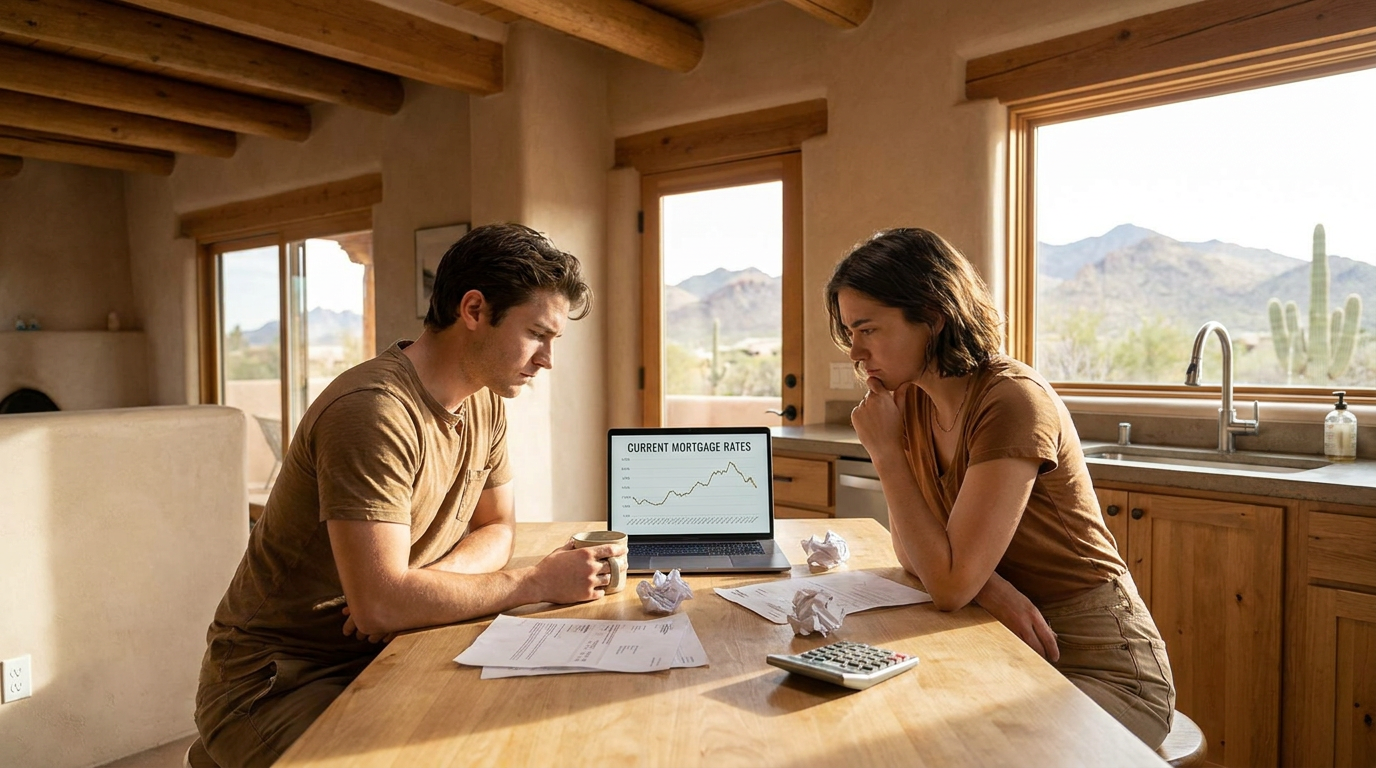
3. Make Election Season Work For You
Election years tend to produce volatility—both in markets and in buyer psychology. That can create opportunities:
- Some buyers will step back in the fall, giving you less competition for certain homes.
- Sellers worried about “what comes next” may be more open to price reductions or concessions.
- If rates dip again on any positive inflation or Fed news, being pre‑approved allows you to move quickly.
Instead of letting the election freeze you, use it as a window to negotiate from a position of strength—backed by a solid pre‑approval and a clear game plan.
How Aron Home Loans Helps You Navigate High‑Anxiety Markets
As a mortgage broker serving Arizona, California, New Mexico, and Texas, Aron Home Loans works with multiple lenders to shop for competitive rates and loan options that fit your reality—not the headlines.
Here’s how we support buyers and homeowners in this late‑summer 2026 environment:
- Market‑current rate guidance: We monitor 30‑year and 15‑year fixed trends, investor programs, and buydown options daily so your quote reflects what’s happening this week, not last quarter.
- Scenario planning: We’ll compare buying now vs. waiting, different price points, and various down payment and rate buydown structures.
- Local insight: Because we focus on AZ, CA, NM, and TX, we understand the nuances of each market—from Phoenix cooling but still pricey, to builder incentives in Texas suburbs, to tight inventory pockets in Southern California.
- Calm, no‑pressure guidance: Our role is to help you feel clear and confident, whether you decide to buy this fall, next year, or not at all.

Bottom Line: Don’t Let Anxiety Make the Decision for You
Yes, mortgage rates in August 2026 are lower than they were a few months ago—but affordability is still stretched, and it’s completely normal to feel nervous about job stability, the election, and where the economy is headed.
The key is not to let that anxiety quietly make your decision for you. Instead, ground your next move in:
- Clear, realistic numbers for your budget and reserves
- Scenario planning tailored to your job, family, and location
- Up‑to‑date Southwest market insights—not national averages alone
If you’re considering a purchase or refinance in Arizona, California, New Mexico, or Texas and want guidance that reflects where rates and the market truly stand as of late August 2026, Aron Home Loans is here to help. We’ll walk you through your options, answer your questions, and help you decide whether now is the right time—without pressure.
Ready to turn “low rates, high anxiety” into a clear action plan? Reach out to Aron Home Loans today to explore your options with a local, market‑current mortgage expert.