
Why More Southwest Sellers Are Offering Concessions Again — And How Buyers Can Use Them to Offset 2026’s High Rates
High Rates, More Inventory — And the Return of Seller Concessions in the Southwest
If you’re shopping for a home in Arizona, California, New Mexico, or Texas in mid‑2026, you’re walking into a very different market than even a year or two ago. As of June 28, 2026, national average 30‑year fixed mortgage rates are hovering around 6.4%–6.5%, according to multiple rate trackers, with many lenders advertising purchase APRs in the mid‑6% range for well‑qualified buyers. That’s lower than the peaks we saw post‑pandemic, but still well above the sub‑4% world many homeowners remember.
At the same time, 2026 housing data shows a market that’s slowly rebalancing. Existing‑home sales have ticked up, new‑home sales have softened, and active inventory is gradually improving nationwide, including across much of the Southwest. Sellers and builders who got used to multiple offers over asking are now facing more competition — and they’re responding with something buyers haven’t seen in a while: meaningful seller concessions.
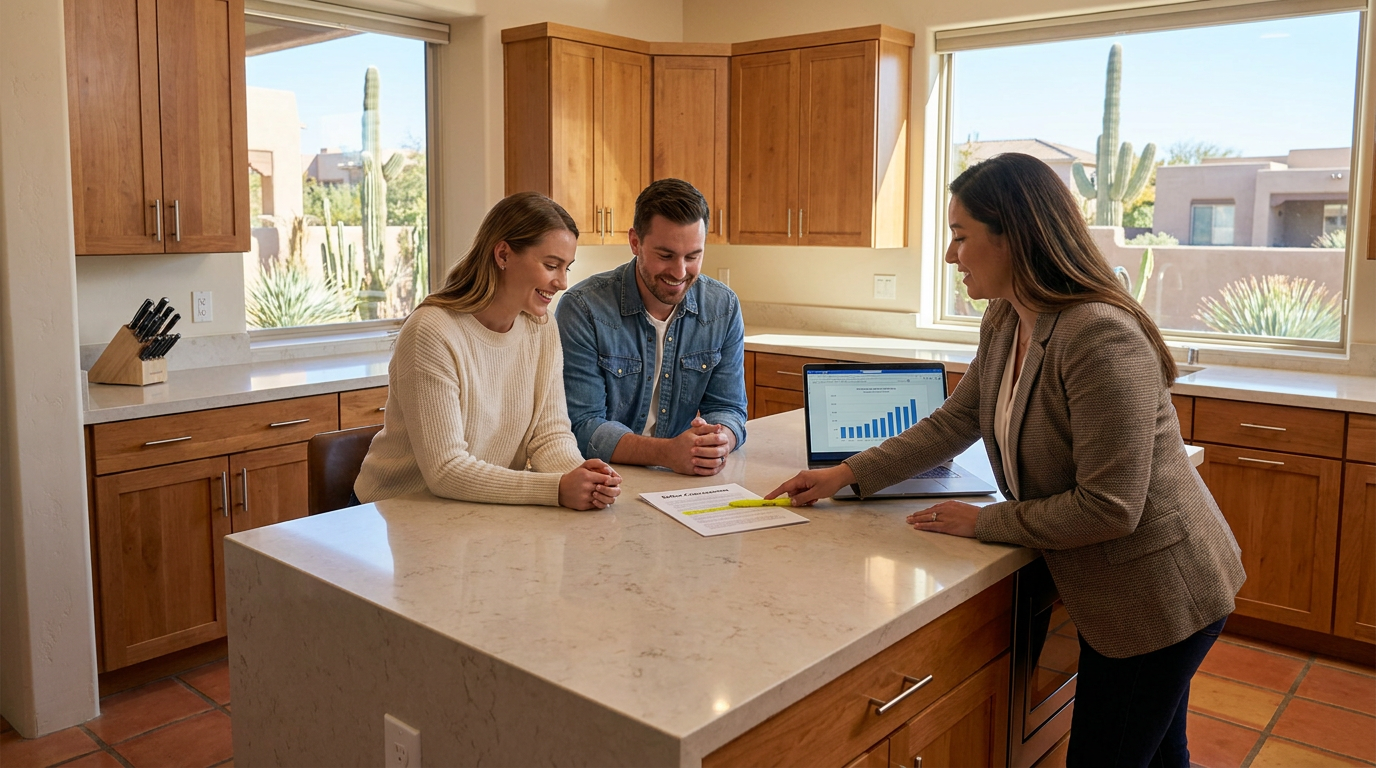
For buyers in AZ, CA, NM, and TX, this shift creates a powerful opportunity. Used correctly, concessions can help offset 2026’s high mortgage rates, reduce your upfront costs, and even improve your long‑term affordability.
What Are Seller Concessions in 2026’s Market?
Seller concessions are incentives a seller offers to make the deal more attractive. Instead of just dropping the price, they might agree to pay certain buyer costs or fund a mortgage rate buydown. In today’s Southwest market, the most common concessions include:
- Closing‑cost credits – The seller covers some or all of your non‑recurring closing costs, such as lender fees, title charges, and escrow costs. This can easily total thousands of dollars.
- Permanent rate buydowns – The seller contributes money that your lender uses to permanently reduce your interest rate for the life of the loan.
- Temporary buydowns (e.g., 2‑1 or 1‑0 buydown) – The seller funds a structure that lowers your interest rate for the first one to two years of the loan, then it steps up to the note rate.
- Builder incentives – On new construction in AZ, CA, NM, and TX, builders are increasingly offering appliance packages, lot premiums, design‑center credits, and closing‑cost or buydown incentives tied to preferred lenders.
- Repair credits and upgrade allowances – Instead of doing repairs, sellers offer a credit you can use for improvements after closing.
National research on the 2026 housing market notes that inventory is still below pre‑pandemic levels but rising, which is pushing sellers and builders to use these kinds of concessions more often to compete rather than just rely on price cuts alone. That’s very visible on the ground in many Southwest metros.
Why Concessions Are Coming Back in AZ, CA, NM & TX
1. Rates Are Still High Enough to Hurt Affordability
The Federal Reserve held the federal funds rate at 3.50%–3.75% at its June 17, 2026 meeting and signaled a more hawkish stance going forward. Market commentary following that meeting highlights that investors now expect policy rates to stay higher for longer, which has kept the 10‑year Treasury yield — and therefore mortgage rates — elevated into the mid‑6% range.
For Southwest buyers, that translates into noticeably higher monthly payments and tighter debt‑to‑income ratios. Sellers who want to get deals done are realizing that helping with the buyer’s payment can be more effective than simply shaving a small amount off the price.
2. Inventory Is Improving and Buyers Have More Choices
Recent housing reports for June 2026 show existing‑home sales holding up while new‑home sales soften and active listings rise. Although inventory is still below pre‑2020 norms, it’s clearly improving — and that’s especially true in growing Sun Belt markets across Arizona, California, New Mexico, and Texas.
With more options on the market, buyers are less willing to waive inspections or bid far above list. Instead, they’re asking, “What can the seller do to help with my payment or my cash to close?” That’s pushing concessions back to the forefront of negotiations.
3. Builders Need to Move Standing Inventory
New‑home sales data shows builders facing more resistance from rate‑sensitive buyers in 2026. To keep absorption up, many large and regional builders are offering:
- Closing‑cost assistance if you use their preferred lender
- Seller‑paid temporary buydowns (2‑1 or 1‑0 structures)
- Upgrade packages — flooring, countertops, landscaping, or appliance bundles
In a number of Southwest communities, it’s now standard to see marketing such as “3% toward closing costs” or “Seller will buy down your rate.” These incentives can materially change your monthly payment and your cash needed at closing.
How Concessions Can Help Offset 2026’s High Mortgage Rates
When 30‑year fixed rates are in the mid‑6% range, small changes have a big impact over 30 years. Here’s how different types of concessions can help buyers in AZ, CA, NM, and TX.
1. Using Seller Credits to Reduce Cash to Close
If your main pain point is cash, not the payment, a seller credit to closing costs can be ideal. Instead of asking a seller to drop the price by $10,000, you might ask for $10,000 in closing‑cost credits. In many real‑world 2026 scenarios, that can:
- Cover most or all of your lender and title fees
- Allow you to keep more money in reserves after closing
- Free up funds to pay down higher‑interest debts or furnish the home
In some cases, keeping your purchase price a bit higher but having the seller pay closing costs can make your offer more attractive while still fixing your real problem: upfront cash.
2. Permanent Rate Buydowns: Lower Payment for the Life of the Loan
A permanent rate buydown uses seller funds to reduce your interest rate for the entire loan term. In a mid‑6% market, even a 0.25%–0.50% rate reduction can meaningfully lower your monthly payment.
For example (illustrative only, not a quote):
- On a $450,000 loan at 6.5%, your principal and interest payment is higher than it would be at 6.0%.
- If a seller funds a buydown that reduces your rate to 6.0%, your monthly payment could drop by over $100.
- Over a 7‑ to 10‑year period (how long many homeowners keep a mortgage), that adds up to significant savings versus a small price cut.
Because affordability pressures are expected to persist through the second half of 2026, a permanent buydown can be a smart hedge if you plan to stay in the home for several years and don’t want to rely on future rate cuts.
3. Temporary Buydowns: Short‑Term Relief While You Grow Into the Payment
Temporary buydowns — such as a 2‑1 buydown — are also popular in the 2026 Southwest market. With a 2‑1 buydown:
- Your rate is reduced by 2% in year one, 1% in year two, then returns to the full note rate in year three and beyond.
- The seller prepays the difference in interest into an escrow account at closing.
- You must still qualify based on the full note rate, but your first two years of payments are significantly lower.
This structure works best for buyers who expect their income to rise, plan to pay down other debts, or think there’s a reasonable chance of refinancing in a few years if/when rates ease. In many AZ, CA, NM, and TX transactions today, builders and resale sellers are offering 2‑1 buydowns instead of bigger price cuts because buyers feel the payment difference immediately.

Permanent vs. Temporary Buydowns: Which Should Southwest Buyers Choose?
There’s no one‑size‑fits‑all answer, but here’s a quick way to think about it if you’re buying in Arizona, California, New Mexico, or Texas in 2026.
Choose a Permanent Buydown If:
- You expect to keep the home and mortgage for 7+ years.
- You’re risk‑averse and want predictable payments in a still‑uncertain rate environment.
- You’re stretching a bit on monthly affordability and want lasting relief, not just a two‑year discount.
Choose a Temporary Buydown If:
- You’re confident your income will increase (promotions, business growth, or a second earner returning to work).
- You plan to refinance or sell within a few years if rates improve.
- The seller or builder is offering a generous temporary buydown and you don’t want to increase your loan amount.
In practice, many 2026 Southwest buyers are combining a modest price negotiation with a seller‑funded credit that the lender uses for either a permanent or temporary buydown — whichever best fits the buyer’s situation.
How to Negotiate Seller Concessions in 2026 (Step‑by‑Step)
1. Start With Your True Pain Point
Before you submit an offer, talk with your loan advisor about where you feel the most pressure:
- Is it monthly payment? A rate buydown may help more than a price cut.
- Is it cash to close? Ask for closing‑cost credits.
- Is it both? Structure a combination — some credit to costs, some to a modest rate buydown.
In a mid‑6% rate world, a well‑targeted concession can often save you more over your expected timeframe than a similar dollar amount in price reduction.
2. Analyze the Seller’s Position
Your agent and loan advisor should help you understand:
- How long the property has been on the market.
- Whether there have been previous price reductions.
- How it compares to similar homes in the neighborhood.
- Whether competing listings (especially new builds) are openly advertising concessions.
In 2026, many sellers in AZ, CA, NM, and TX are more willing to negotiate concessions than large price cuts, especially if they’re anchored to a certain sale price for their next purchase or refinance.
3. Write a Clear, Strategic Offer
When you’re ready to write an offer:
- Be explicit about the dollar amount or percentage you’re asking the seller to contribute.
- State how the credit will be used (closing costs, permanent buydown, temporary buydown, or a combination), subject to lender approval.
- Work closely with your loan advisor so your request fits within loan program limits for seller contributions, which vary by loan type and down payment.
Remember: a slightly higher purchase price with a strong seller credit can still appraise and can sometimes beat other offers that focus solely on price.
4. Have Your Lender Model Multiple Scenarios
With mortgage rates likely to stay elevated into the second half of 2026, you want to be precise. Before you finalize terms, ask your lender to compare:
- No concessions vs. a price reduction
- Price reduction vs. seller‑paid closing costs
- Price reduction vs. permanent buydown vs. temporary buydown
Looking at real numbers for your loan amount and credit score will often reveal that one structure clearly saves you more over your expected time in the home.

Local Nuances: AZ, CA, NM & TX Buyers Should Keep in Mind
Every Southwest market is slightly different in mid‑2026:
- Arizona – With 30‑year fixed quotes clustering around the low‑6% range for strong‑credit buyers, buyers in Phoenix, Tucson, and secondary markets are seeing more builders and resale sellers advertise buydowns and closing‑cost help on listings that have been sitting.
- California – Higher price points mean every quarter‑point of interest rate matters more. In many SoCal and Bay Area markets, permanent buydowns funded by the seller or builder can be more impactful than modest price cuts.
- New Mexico – With a mix of more affordable price points and pockets of strong demand, concessions are often targeted: sellers may be more open to closing‑cost credits and repairs rather than big list‑price reductions.
- Texas – Rapidly growing metros like Austin, Dallas–Fort Worth, San Antonio, and Houston are seeing increased inventory and competitive builder incentives, including generous closing‑cost credits and 2‑1 buydowns.
In all four states, the common thread is this: as 2026 progresses, more sellers are realizing they need to partner with buyers and their lenders to bridge the affordability gap created by today’s rates.
Work With a Lender Who Knows How to Structure Concessions
Concessions are only as powerful as the strategy behind them. The same $10,000 from a seller can be:
- Used inefficiently on scattered fees, or
- Deployed in a way that significantly lowers your monthly payment or cash to close.
That’s where an experienced mortgage broker serving Arizona, California, New Mexico, and Texas can make a real difference in 2026’s market. At Aron Home Loans, we’ll:
- Review your full financial picture and long‑term plans.
- Coordinate with your real estate agent to build concession strategy into your offer.
- Compare permanent vs. temporary buydowns, price reductions, and closing‑cost credits tailored to your loan options.
- Help you navigate program‑specific rules for seller contributions so you don’t leave money on the table.
Thinking About Buying in 2026? Use the Market Shift to Your Advantage
The Fed’s June 2026 meeting made it clear: there’s no guarantee of quick rate relief this year. Yet the combination of mid‑6% mortgage rates, easing new‑home sales, and rising inventory means more Southwest sellers are once again willing — and often eager — to offer concessions.
If you’re on the fence about buying in Arizona, California, New Mexico, or Texas, the key question isn’t just “Where are rates?” It’s “How can I structure my offer so the seller helps me beat today’s rates?”
Ready to explore what that could look like for you? Reach out to Aron Home Loans to compare scenarios, understand your concession options, and build a purchase strategy that makes 2026’s market work in your favor — not against you.