
Why More Western Homebuyers Are Choosing Smaller Homes and Longer Commutes in 2026’s ‘Stretched but Stuck’ Market
2026: A ‘Stretched but Stuck’ Housing Market in the West
If you’re shopping for a home in Arizona, California, New Mexico, or Texas in mid‑2026, you’ve probably felt it: prices remain high, mortgage rates are still elevated, and yet homes are selling. Buyers aren’t dropping out—they’re adapting.
As of June 14, 2026, national average 30‑year fixed mortgage rates are hovering in the mid‑6% range, roughly 6.35%–6.53%. That’s only slightly lower than earlier in the week and nearly flat compared with June 12’s 6.526% reading, so it’s still a far cry from the ultra‑low rates many people remember. At the same time, the Federal Reserve held the federal funds rate at 5.25%–5.50% in its June meeting, signaling that higher borrowing costs could stick around through the rest of 2026.
On the housing side, existing‑home sales rose about 3.2% in May to a 4.17 million annual pace—the fastest since December—with first‑time buyers making up roughly 35% of purchases. The national median existing‑home price is around $429,300, and inventory has improved to about 1.55 million homes. New‑construction homes are also playing a bigger role, with a median new‑home price around $422,500 in the latest reports. Analysts increasingly describe today’s conditions as a “soft” market, not a crash: inventory is better than during the tightest periods, demand is still positive, and buyers are simply making tougher trade‑offs.
Across Western states like AZ, CA, NM, and TX, this environment is pushing buyers toward two main compromises: smaller homes and longer commutes. At Aron Home Loans, we’re seeing this trend every day—and helping buyers navigate it strategically.
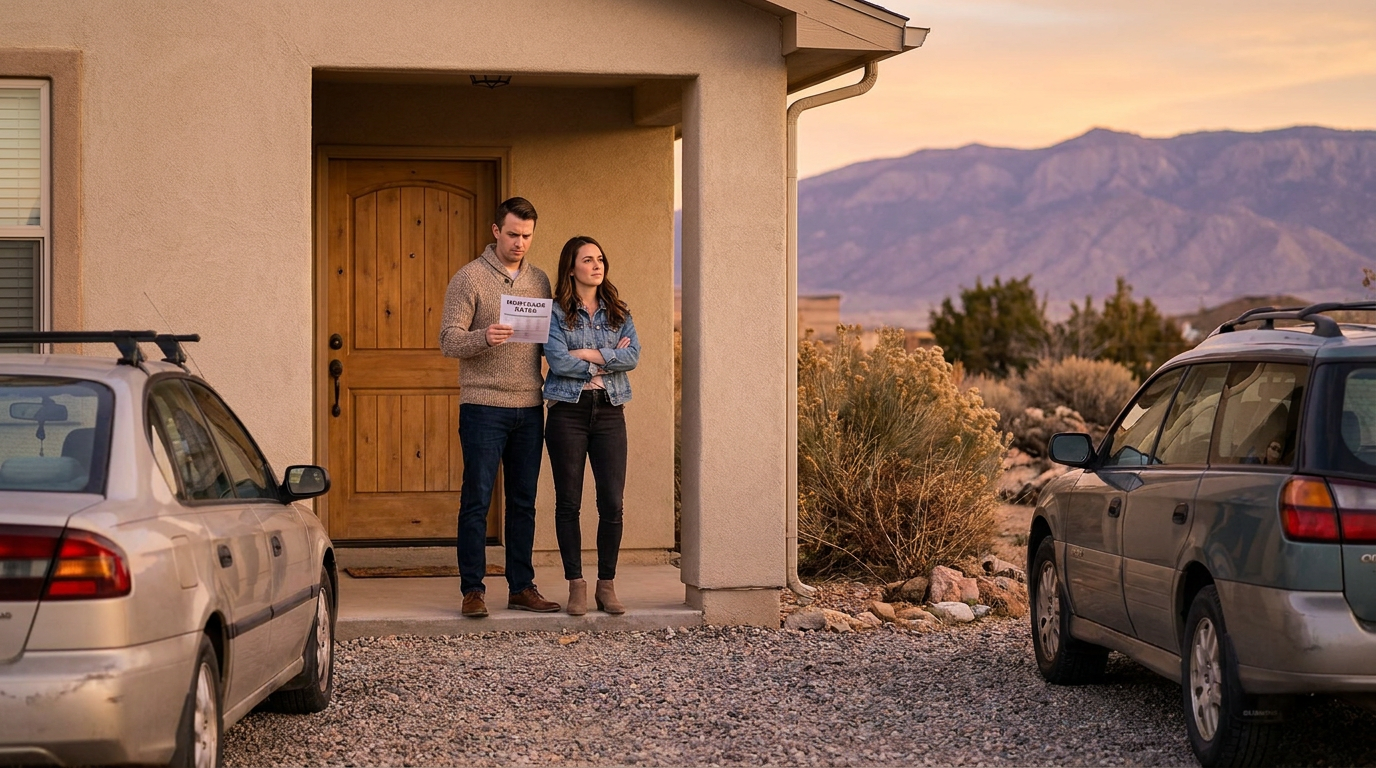
Why Buyers Are Downsizing Their Home Expectations
With mortgage rates stuck in the mid‑6% range and prices still high, the monthly payment has become the real decision‑maker. Here’s why smaller homes are suddenly looking more attractive in 2026:
- Payment pressure: Even a small difference in price—say, $40,000 to $60,000—can add hundreds of dollars to your monthly payment at today’s interest rates.
- Higher carrying costs: Larger homes usually mean higher property taxes, larger utility bills, and more maintenance.
- Shift in priorities: Many buyers are deciding they’d rather have a stable monthly payment and some lifestyle flexibility than the biggest home they can possibly qualify for.
In practice, that looks like:
- Choosing a 3‑bedroom instead of a 4‑bedroom in the Phoenix suburbs
- Opting for 1,600–1,800 square feet in a Texas master‑planned community instead of 2,200+ square feet closer in
- Buying a townhome or condo in the Inland Empire or Sacramento suburbs instead of a detached home in a pricier core market
How to Make a Smaller Home Work for You
If you’re considering a smaller home to keep your monthly payment manageable, you can still live comfortably with the right planning:
- Prioritize layout over square footage: An efficient floor plan with an open main living area and fewer hallways can feel much larger than the square footage suggests.
- Think about multi‑use spaces: A guest bedroom that doubles as a home office, or a loft that functions as both a playroom and media room, can reduce your need for extra rooms.
- Look for storage solutions: Garages with built‑in shelving, walk‑in closets, and pantry space can make a smaller home feel organized instead of cramped.
- Consider outdoor living: In climates like Arizona, New Mexico, and much of Texas and California, a covered patio or usable yard can effectively extend your living space.
Why Longer Commutes Are Back on the Table
Another way buyers in 2026 are stretching their dollars is by stretching their commute.
In many Western metros, the closer you get to job centers, the higher the price per square foot—and the more competitive the market. With mortgage rates around the mid‑6% range and no quick Fed rate cuts on the horizon, many buyers are choosing to move farther out in exchange for a lower purchase price.
We see this trend clearly in markets like:
- Arizona: Buyers priced out of central Phoenix and Scottsdale are looking harder at outer suburbs and exurbs where new construction is available and prices are more manageable.
- California: In metros like Los Angeles and the Bay Area, more buyers are considering inland or outer‑ring communities where they can afford a smaller home or townhome instead of competing in premium neighborhoods.
- New Mexico: Around Albuquerque and Santa Fe, buyers are weighing longer drives in exchange for more land or newer construction at lower price points.
- Texas: In Austin, Dallas–Fort Worth, Houston, and San Antonio, expanding suburbs and master‑planned communities along major corridors are attracting buyers willing to extend their commute.
Questions to Ask Before Committing to a Longer Commute
A longer commute can make your mortgage more affordable, but it also impacts your daily life. Before you buy farther from work, ask yourself:
- What is the true door‑to‑door time? Use realistic traffic estimates, not just what the map shows at 11 p.m.
- How many days am I in the office? If you commute two days a week instead of five, a longer drive might be worth a better house or lower payment.
- What are fuel and toll costs? With energy prices affecting inflation in 2026, higher commuting costs can offset some of your housing savings.
- How will this affect family time and routines? Consider school schedules, activities, and your own downtime.

New Construction: A Key Option in ‘Stretched but Stuck’ Markets
With the median new‑construction price sitting around $422,500 nationally, builders are a crucial outlet for buyers in 2026—especially in Western states where resale inventory can still feel tight in many neighborhoods.
Home shoppers in AZ, CA, NM, and TX are often finding that brand‑new, slightly smaller homes on the edge of metro areas are more affordable than older, larger homes closer in. Builders also sometimes offer incentives, such as:
- Closing cost credits
- Temporary rate buydowns
- Upgrades or options packages
These incentives can help offset today’s higher rates and make a smaller home or longer commute more palatable.
Tips for Buying New Construction in 2026
- Get pre‑approved early: Know your budget based on today’s mid‑6% mortgage rates so you don’t over‑commit to upgrades that strain your payment.
- Compare builder incentives vs. rate options: Sometimes a smaller incentive applied to a rate buydown can save more over time than a bigger design credit.
- Consider future resale: Choose communities and floor plans that are likely to stay in demand—a practical layout often holds value better than sheer size.
Practical Strategies for Buyers in 2026
If you feel stretched by today’s prices but still want—or need—to buy, here are practical strategies we recommend to Western homebuyers:
1. Start with a Target Monthly Payment, Not a Price
With rates in the mid‑6% range and little sign of immediate Fed cuts, your monthly payment is the anchor. Decide on a comfortable payment first, then work backward to your price range. A local mortgage broker like Aron Home Loans can run scenarios with different down payments, loan types, and terms to show you the trade‑offs clearly.
2. Be Flexible on At Least Two of the “Big Three”
Most buyers can’t get everything on their wish list in 2026. Choose at least two of these areas where you’re willing to compromise:
- Size: Smaller square footage, fewer bedrooms, or a different layout
- Location: A longer commute or a different side of town
- Condition/Age: An older home that may require some updates over time
Knowing in advance where you’ll bend makes decisions less stressful when you’re touring homes.
3. Explore Different Loan Options
In a “stretched but stuck” rate environment, the right loan structure can make a big difference. Depending on your situation, it may be worth considering:
- Conventional vs. FHA: First‑time buyers (who now account for about 35% of purchases) may benefit from lower down‑payment options or more flexible guidelines.
- Buydowns and points: Paying points upfront or using seller/builder credits to temporarily lower your rate for the first few years can improve affordability while you wait for potential future rate changes.
- Term length: While 30‑year fixed loans are most common, some buyers explore slightly shorter or longer terms (where available) to match cash‑flow needs.
An experienced mortgage broker can help you compare scenarios so you choose a loan that fits today’s reality and your long‑term plans.
4. Plan for “Phase Two” Improvements
Many 2026 buyers are accepting a smaller or less‑than‑perfect home now, with a plan to improve it later. If that’s you:
- Prioritize solid fundamentals (structure, roof, systems) over cosmetic perfection.
- Budget for phased projects like flooring, paint, or a backyard upgrade.
- Consider future cash‑out or renovation financing options if you expect to tackle larger projects down the line.

How Aron Home Loans Helps Western Buyers Navigate 2026
Aron Home Loans serves buyers across Arizona, California, New Mexico, and Texas—markets where the 2026 housing story is the same at its core: buyers are stretched by higher borrowing costs and prices, but they’re still moving forward.
Our role is to:
- Translate today’s data into clear decisions: We take current rate conditions, local price trends, and your budget and turn them into real numbers you can act on.
- Shop multiple lenders for you: As a mortgage broker, we compare lenders and loan programs to help you find competitive options in a mid‑6% rate world.
- Model trade‑offs: We can show you how a smaller home, longer commute, or different down payment changes your monthly payment and overall cost, so you can choose your compromises with confidence.
Thinking About Buying in 2026? Start with a Conversation
Today’s Western housing market may be “stretched but stuck,” but that doesn’t mean you’re stuck. Thousands of buyers—especially first‑timers—are successfully closing on homes by staying flexible on size and location, while staying firm on what matters most: a sustainable monthly payment and a home that supports their life.
If you’re considering a move in Arizona, California, New Mexico, or Texas, Aron Home Loans can help you:
- Understand what you can comfortably afford at today’s rates
- Compare loan options and potential buydowns
- Build a strategy that balances home size, commute, and budget
Ready to explore your options? Reach out to Aron Home Loans for a personalized consultation and pre‑approval tailored to 2026’s market realities—and to your goals.